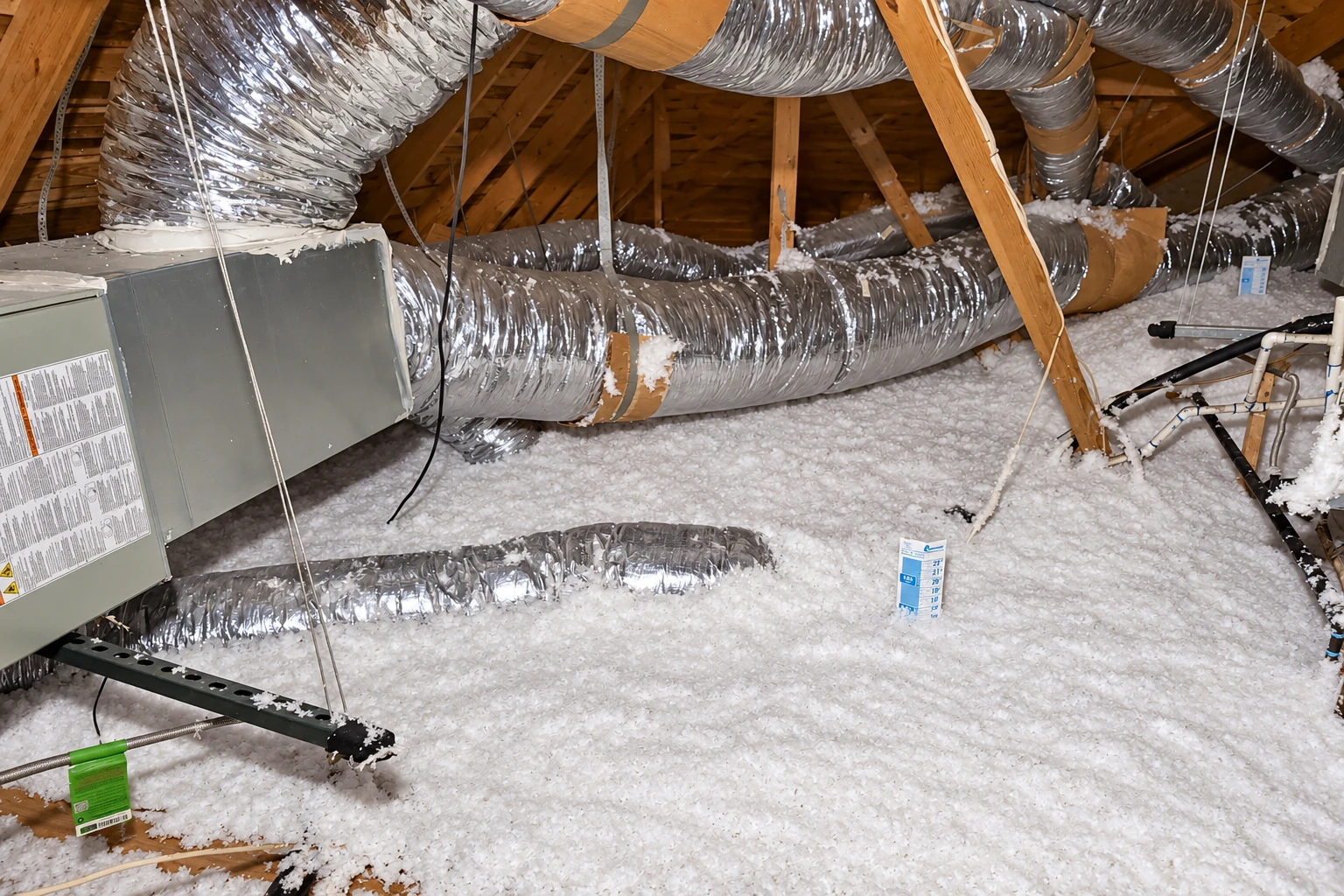
Blown-in insulation in Salinas CA - attics filled full out to the edges
Hot upstairs or a drafty house? We blow loose fill across your attic, full and even out to the edges.
Is blown-in insulation right for my Salinas attic?
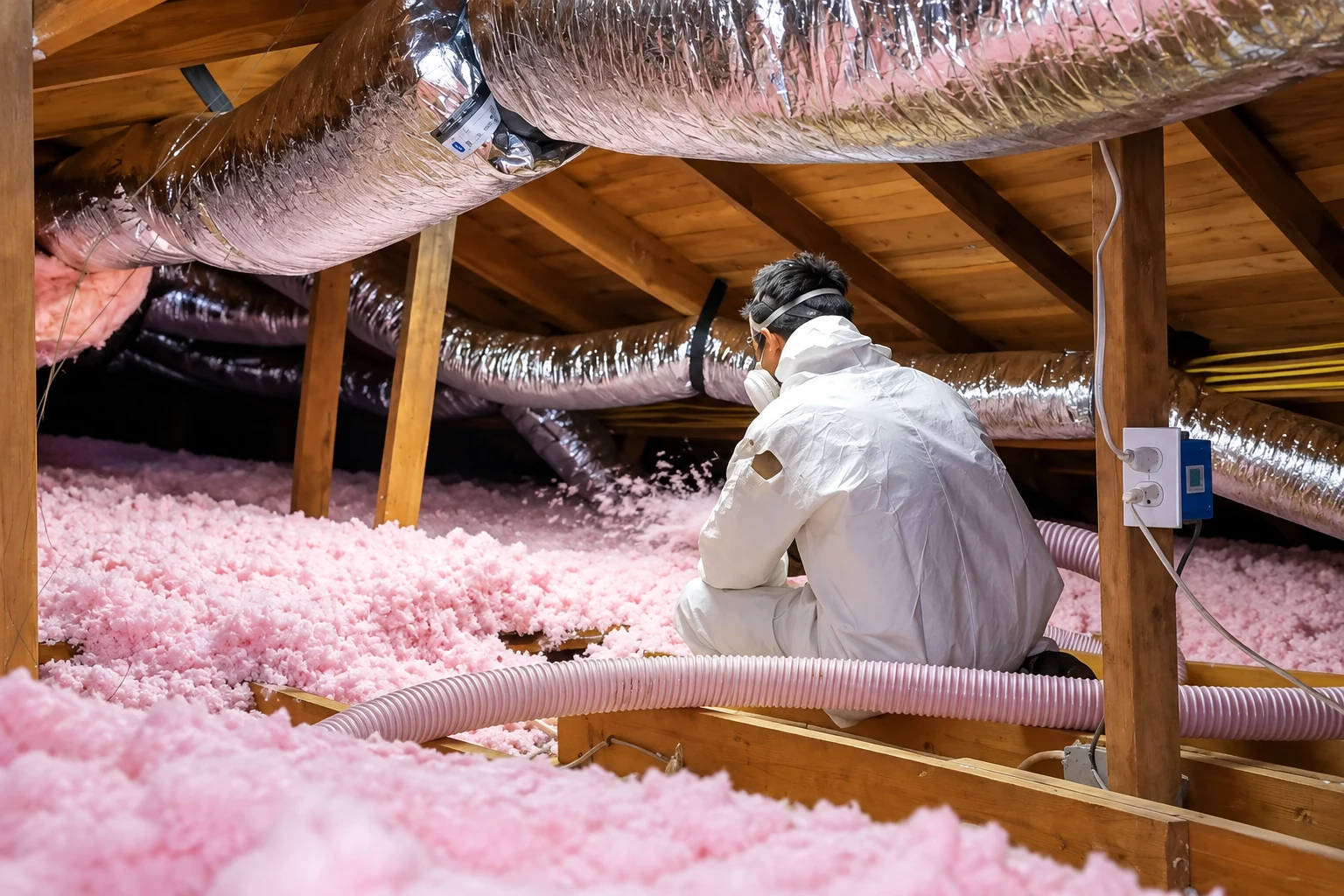
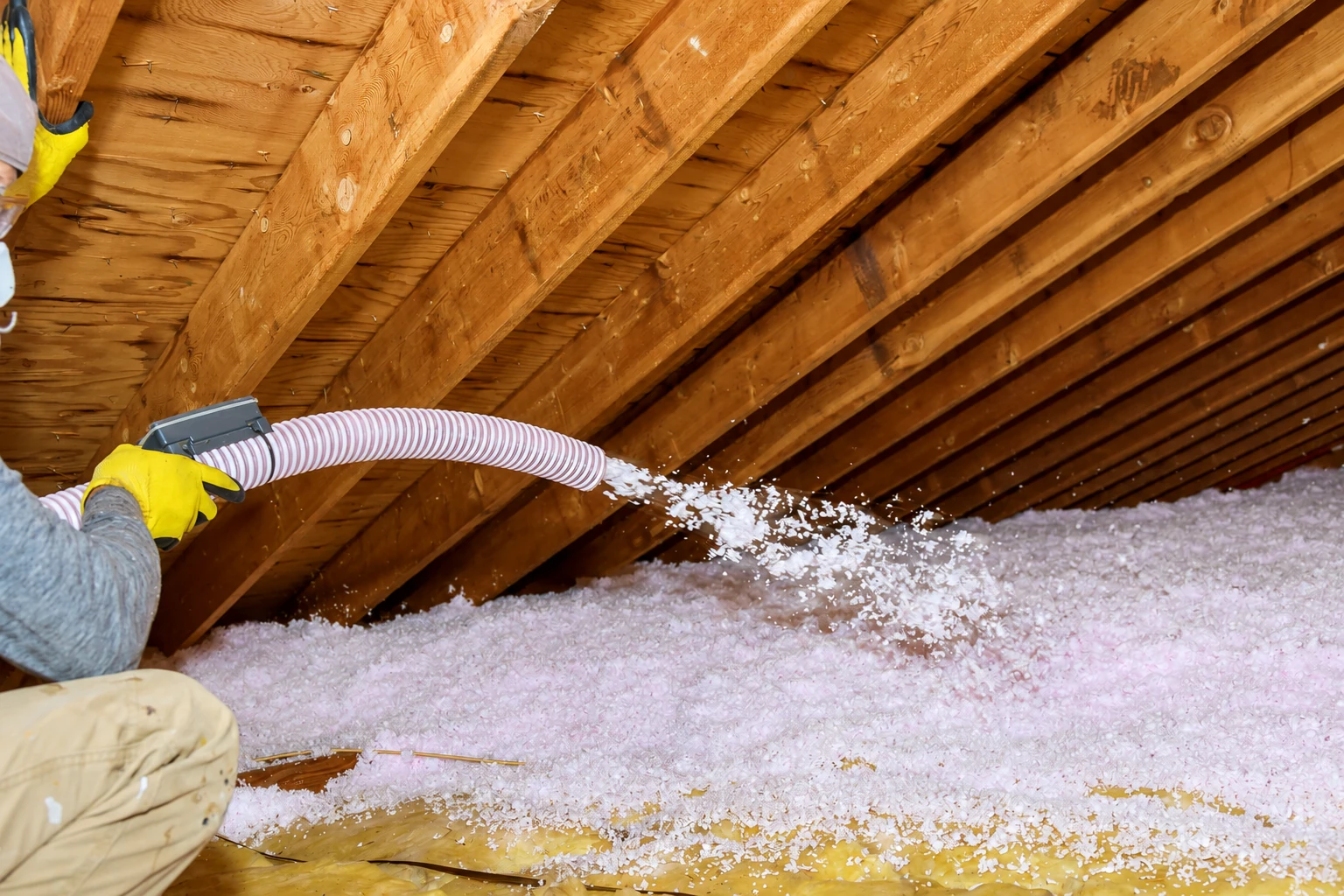
Blown-in insulation is loose fiberglass, rock wool or cellulose blown through a hose across your attic floor, and in Salinas homes it's often the easiest way to calm down a hot upstairs or a drafty house. It tucks into odd corners and around pipes and framing, and when it's packed in firm it slows the air sneaking through too.
Most calls I get start the same way, with an upstairs that's hot by afternoon, a room over the garage that never feels right or a power bill that keeps creeping up. What moves the price is mostly the size of your attic, how many inches are already up there, how tight it is to crawl around in and whether anything has to be cleaned out or fixed first, and those same things set the schedule. I come out, climb up there and write the estimate myself, so your figure is based on your attic and not a guess.
How we put in blown-in insulation
Blown-in is a good fit for cramped attics full of pipes and framing, where precut batts would leave gaps everywhere, and when I come out I'll measure what you already have and tell you honestly if it's enough. If it isn't, we start with any problems we find, because fresh insulation over a leak or a bad patch just hides it. Then we do air sealing, which means closing the gaps around can lights, pipes and the attic hatch, so the new fill isn't fighting a draft. We set baffles at the eaves, little chutes that hold insulation back from the vents, so the attic can still breathe. After that we take our time blowing it in full and firm out to the edges, where attics are usually thinnest, instead of piling it up in the middle, and we clean up before we head out.
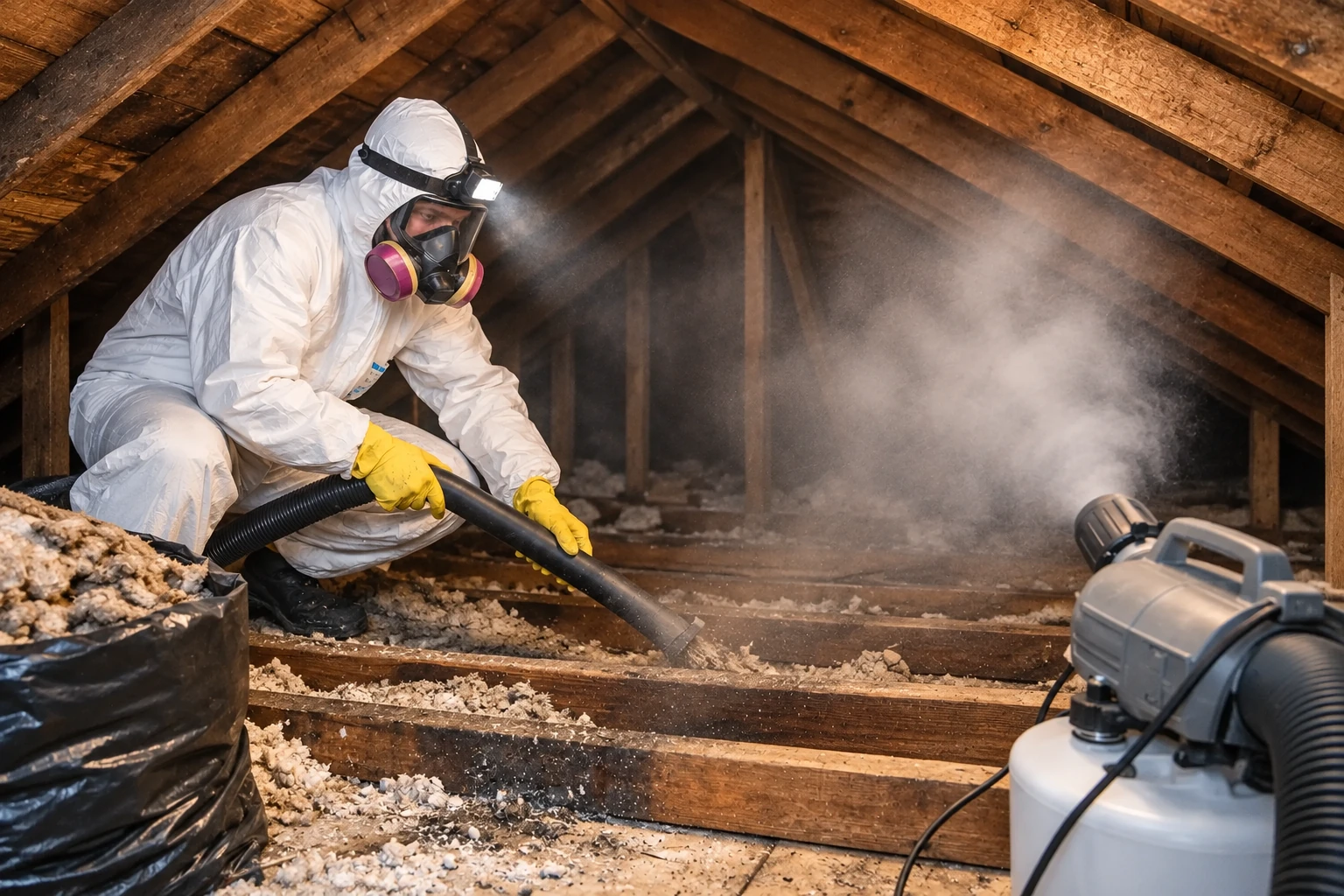
Sometimes the attic isn't the whole story. When the old fill is wet, moldy or full of droppings, we clear it out with insulation removal first, since new material laid over it keeps the problem right where it is. And if cold floors and drafty rooms point past the attic, our home insulation work looks at the rest of the house.
Topping up over what's there
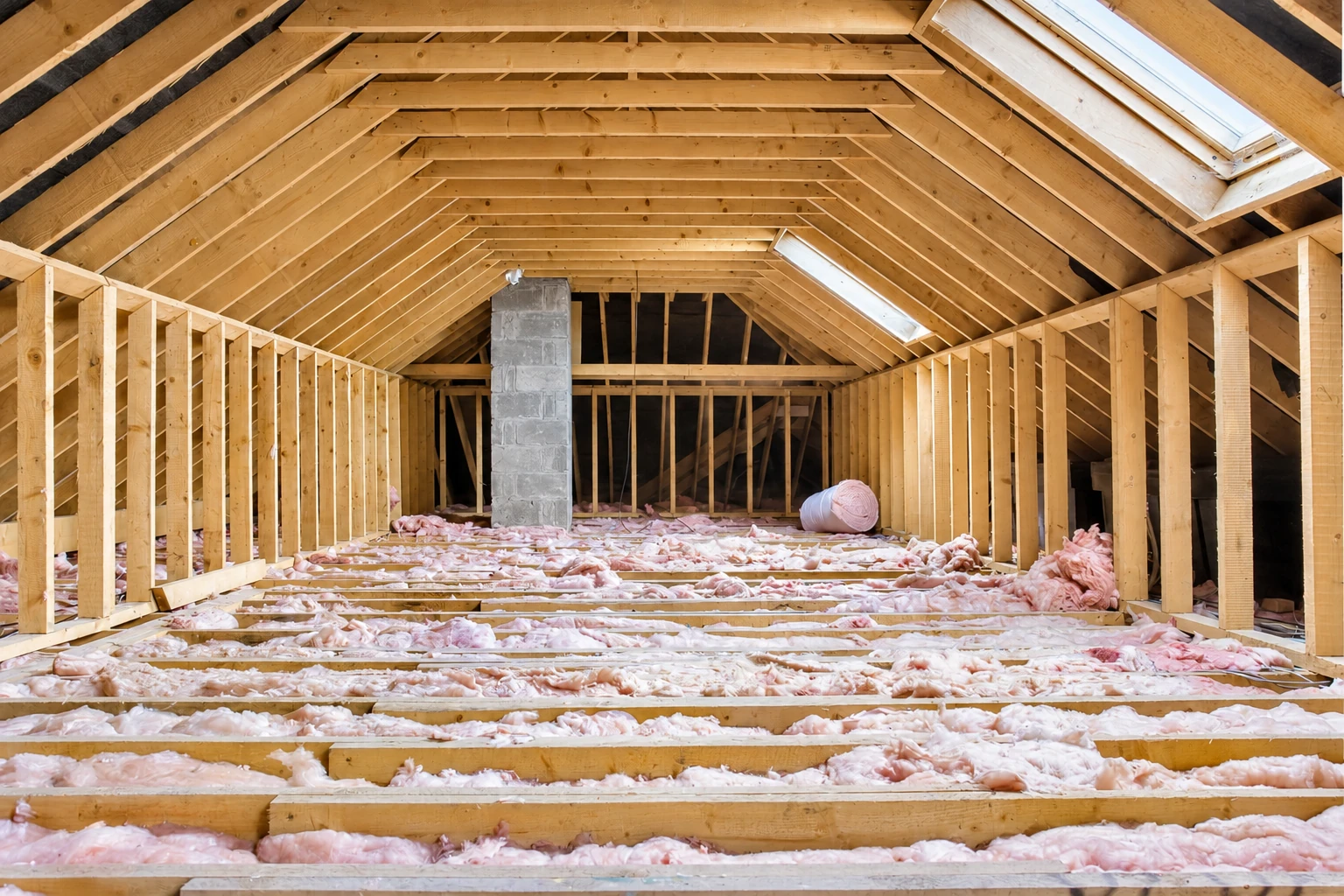
If your old insulation is dry and clean but thin, we seal the gaps and blow fresh fiberglass or cellulose right over it. That's the right call for most attics, and it usually costs a good deal less than tearing everything out.
Spray foam when ducts run overhead
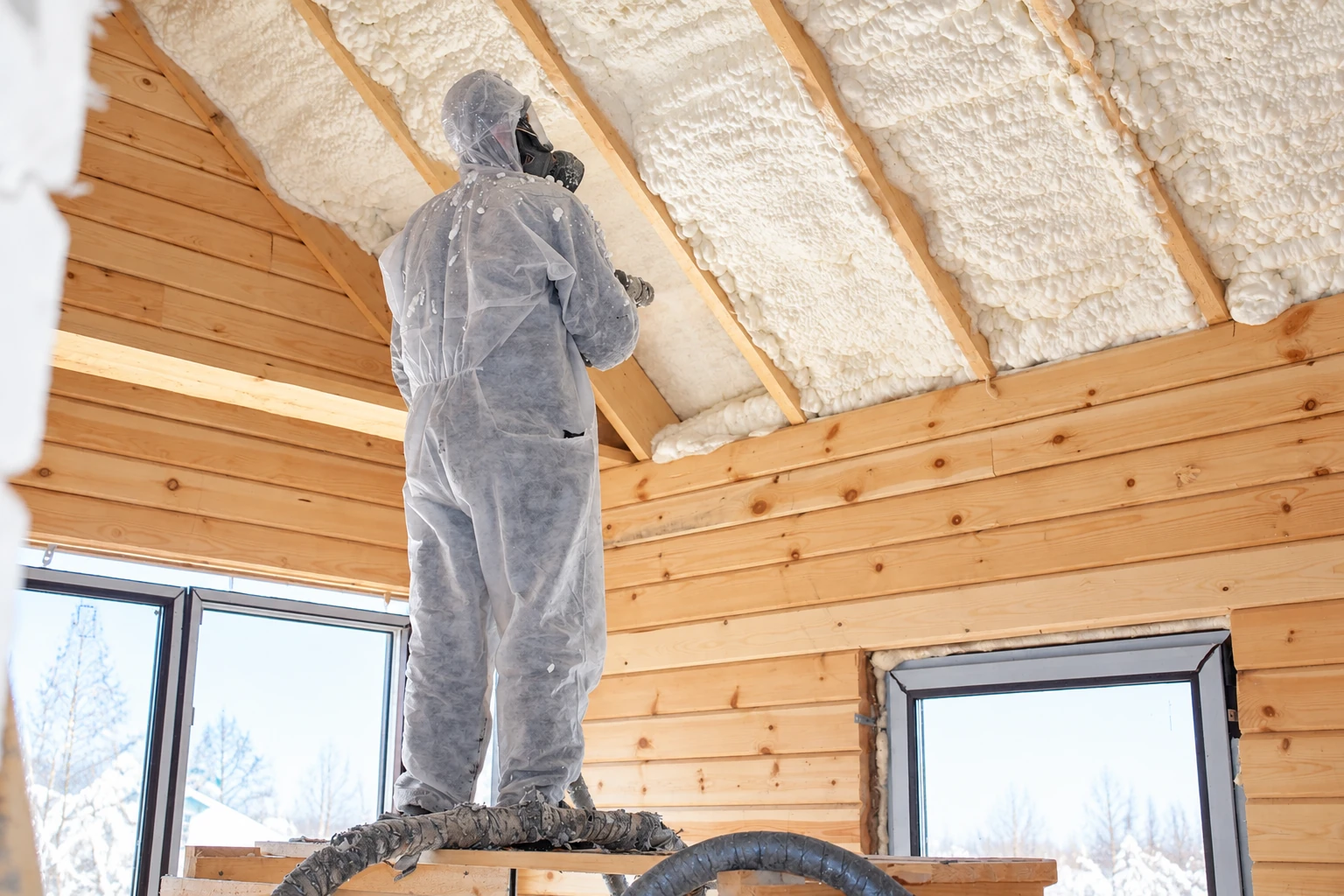
Foam costs more, but it seals air while it insulates, which pays off when your ductwork lives up in the attic, and that's when I'd point you to spray foam. If the ducts aren't up there, sealing the gaps and topping up with loose fill usually wins, and I'll tell you which camp your house is in.
What to know about blown-in insulation in Salinas
California's state licensing board gives insulation its own license class, C-2, which covers anyone installing insulation for heat or sound control. The state's small-job exemption for unlicensed workers tops out at $1,000, and it only applies when the work needs no permit and that person has nobody working for them on it, so a crew blowing in a whole attic should be licensed. The state energy code also sets standards for a home's outer shell by climate zone, which is why the levels a Salinas house is held to aren't the same everywhere in California.
Whether a permit is needed is the city or county office's call, so we check with them on your job, and when one is needed we handle the application and set up the inspection visits. Around here we open plenty of older attics with thin, settled insulation and half-buried vents, and we see the same thing on jobs in Prunedale and Marina.
Blown-in attics, start to finish
Why call us for blown-in insulation
The owner writes every estimate
I've run this business since 2021 after years on commercial insulation crews, and I still come out to look at each job and write the estimate myself. A crew lead runs the install while I check in along the way, so the person who walked your attic is the one keeping an eye on it.
Licensed and insured on every attic
We're fully licensed and insured. That matters up in an attic, where one wrong step can put a foot through your ceiling, and you shouldn't be the one covering it.
Based in Salinas, out across the valley
We're based in Salinas and work across the valley and the coast, in the cities around it and plenty of others nearby. You get the same estimate visit and the same crew habits whether you're across town or a drive down the valley.
Satisfaction guaranteed on every job
That's our promise, and the way I keep it is old commercial habit, doing the work in order and cleaning up as we go. Ask me anything while we're there and I'll happily walk you through what's going on up in your attic.
On a blown-in job the part that matters most happens before the hose ever comes out, so tell us about your attic and I'll come take a look.
(831) 243-7218Get a blown-in insulation estimate for your attic
We reply to every call and message within one business day, and then I set up a time to come out, look at your attic and write the estimate. It's free and on-site, and there's no obligation to go ahead.
Blown-in insulation questions from Salinas homeowners
How do I know if my attic needs more insulation?
If your insulation is level with or below the floor joists, the framing you'd step on up there, so you can easily see them, you should add more. If it sits well above them, you probably have enough, and adding more may not be worth the money. I'll check the inches already up there at the estimate and tell you straight.
Is blown-in insulation better than batts for a Salinas attic?
For most attics, yes. Blowing in loose fill is usually less expensive than laying batts, the precut blankets, and it covers better because it fills around pipes and odd framing, though installation costs can vary. If cost and full coverage both matter to you, blown-in is the one worth pricing first.
How much does blown-in attic insulation cost per square foot?
Installing blown-in attic insulation across the US usually costs about $4 to $7.50 per square foot. Where your attic lands depends on its size, how deep we're going, how tight it is to work in and whether old material or gaps need handling first. Your own number comes from the estimate I write after I've been up there.
What should be fixed in an attic before blowing in insulation?
ENERGY STAR recommends having a professional fix wet insulation from a leaky roof, moldy or rotted framing, or poor attic ventilation before insulating. Knob and tube wiring from before 1930 is on that list too, since it can be a fire hazard touching insulation. If I spot any of these at the estimate, I'll tell you plainly, and we get them handled before new fill goes in.
How long does blown-in cellulose insulation last?
The cellulose industry's trade group says properly installed cellulose can work well for decades, and it counts sound control and fire protection among the benefits. The key word is properly. It has to fill the space completely and go in dense enough, because settling in a thin spot leaves holes and voids.
Can blown-in insulation go over recessed lights in my ceiling?
Only if the fixture is IC-rated, which says it's made to sit in contact with insulation. Cellulose industry practice keeps insulation off heaters and recessed lights that don't carry that rating. I'll look at your lights during the estimate and tell you how we'll handle each one.
Book a blown-in insulation estimate for your attic
Call (831) 243-7218, open every day, and mention your rough attic size and any can lights or old wiring so I come prepared.